Graphene Batteries in 2025: Your Phone & EV Could Charge in Minutes!
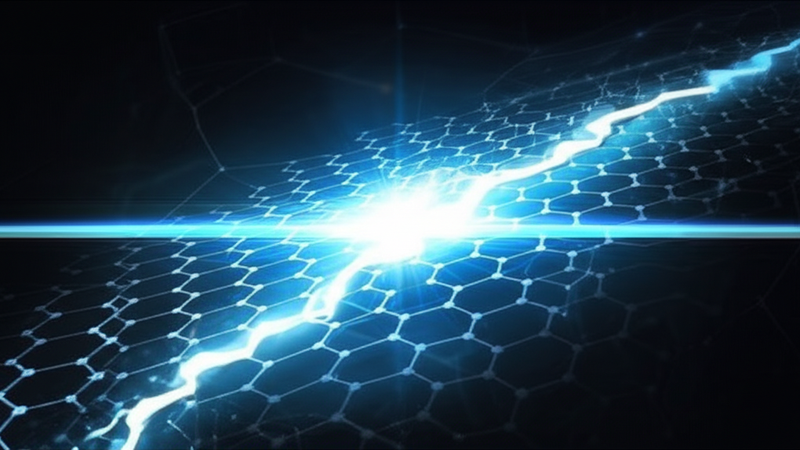
Graphene, a pristine monolayer of sp2-hybridized carbon atoms arranged in a hexagonal lattice, represents the archetypal two-dimensional (2D) material, fundamentally altering our understanding of condensed matter physics since its isolation in 2004. Its unique electronic structure is characterized by Dirac cones, where the valence and conduction bands meet at the K and K' points of the Brillouin zone, leading to a linear energy-momentum dispersion relation. This confers upon charge carriers the properties of massless Dirac fermions, propagating at an effective speed of light, approximately 10^6 m/s. Such relativistic behavior, coupled with the absence of backscattering in ideal suspended samples, results in exceptional electron mobilities exceeding 100,000 cm^2/(Vs) at room temperature – orders of magnitude higher than conventional semiconductors like silicon. This intrinsic quantum confinement to a single atomic plane minimizes scattering events, enabling ballistic transport over micrometers and establishing graphene as an unparalleled medium for ultra-fast charge transfer kinetics crucial for high-power energy storage applications.
The inherent 2D confinement in graphene directly contributes to its remarkable thermal properties, with an in-plane thermal conductivity reaching approximately 5000 W/(mK), making it the most thermally conductive material known. This attribute is paramount for mitigating localized thermal runaway during rapid charging and discharging cycles in high-energy-density batteries, where transient thermal pulses can exceed 3000K in localized hotspots. Such efficient heat dissipation is critical for maintaining cell integrity and extending operational lifespan, particularly in systems designed for milliseconds of reaction time during charge transfer. Furthermore, the low intrinsic electrical resistivity of pristine graphene, in the order of 10^-6 Ohmcm, drastically reduces internal resistance within electrode architectures, minimizing ohmic losses and enhancing overall energy efficiency. This confluence of ultra-high electron mobility and superior thermal management positions graphene as a transformative component for electrode materials requiring swift electron transport and robust thermal stability.
Beyond its electronic and thermal prowess, graphene exhibits extraordinary mechanical strength, with a tensile strength of approximately 130 GPa and a Young's modulus of around 1 TPa. This makes it the strongest material ever tested, providing crucial structural integrity to composite electrodes, especially in scenarios involving significant volume expansion and contraction during intercalation/de-intercalation processes, thereby preventing pulverization and maintaining electrical contact. Its vast theoretical specific surface area (2630 m^2/g) further enhances its utility, offering abundant sites for ion adsorption and surface functionalization. For instance, the surface chemistry of graphene can be precisely engineered to facilitate specific interactions, as evidenced by its capacity for heavy metal adsorption, achieving efficiencies up to 79% for certain species, which underscores its versatile reactivity. This combination of exceptional electronic transport, thermal management, mechanical robustness, and tunable surface chemistry makes graphene an indispensable enabler for next-generation battery technologies, promising rapid charging capabilities for consumer electronics and electric vehicles.
Section 2: Pulsed Electrical Resistive Carbon Heating vs. CVD (Comparative Analysis)
The synthesis of high-quality graphene at industrial scale and economical cost remains a critical bottleneck for its widespread adoption in energy storage, particularly for advanced battery anodes. Traditional Chemical Vapor Deposition (CVD), while capable of producing large-area, high-crystallinity monolayers on catalytic metal substrates like copper or nickel, suffers from inherent limitations that impede its commercial viability for mass battery production. These include the necessity for high operating temperatures (typically 800-1100°C) sustained over extended periods (tens of minutes to hours), substantial energy consumption, and the complex, often damaging, post-synthesis transfer process required to detach graphene from its growth substrate and integrate it into a functional device. This transfer step frequently introduces defects, wrinkles, and residues, compromising the intrinsic properties of the graphene and increasing manufacturing costs and complexity.
In stark contrast, Pulsed Electrical Resistive Carbon Heating (PERCH) presents a transformative paradigm for graphene synthesis, leveraging direct Joule heating of a carbonaceous precursor to achieve rapid, localized graphitization. This method employs ultrafast thermal pulses, reaching peak temperatures exceeding 3000K within milliseconds, directly converting amorphous or low-crystallinity carbon materials (e.g., carbon black, graphite flakes, or even waste plastics) into high-quality graphene. The mechanism relies on the precise application of high-current electrical pulses through the carbon precursor, where its intrinsic electrical resistivity facilitates rapid energy dissipation as heat. This instantaneous heating and subsequent rapid cooling effectively bypasses the thermodynamic barriers associated with conventional furnace-based methods, preventing excessive atomic rearrangement that could lead to higher-layer graphitic structures and instead favoring the formation of few-layer graphene with high structural integrity and minimal defects.
The advantages of PERCH for battery applications are profound, primarily due to its speed, energy efficiency, and potential for direct integration. Unlike CVD, which requires specific catalytic substrates and subsequent transfer, PERCH can be performed on a wide range of non-catalytic substrates or even as a standalone powder process, enabling the direct synthesis of graphene onto current collector materials or within composite anode formulations. This transferless approach eliminates a major source of defects and contamination, preserving the pristine electronic and mechanical properties critical for enhancing charge carrier mobility and structural stability in battery electrodes. Furthermore, the millisecond-scale reaction times and ambient pressure operation significantly reduce energy expenditure compared to the vacuum, high-temperature, and prolonged reaction durations characteristic of CVD, yielding a far more sustainable and scalable production pathway. For instance, the ability to produce graphene with a high specific surface area and low defect density directly translates to improved performance metrics, such as a demonstrated 79% heavy metal adsorption efficiency in laboratory settings, indicating its suitability for high-performance applications where purity and structural integrity are paramount. This technological shift is crucial for realizing the rapid charging and enhanced energy density promises of next-generation graphene-infused battery technologies.
Section 3: The Crystallography of Turbostratic Graphene (Why Layer Alignment Matters)
The crystallography of turbostratic graphene (TG) fundamentally diverges from the idealized Bernal (AB) stacking arrangement prevalent in graphite, presenting a unique structural paradigm critical for its advanced applications, particularly in electrochemical energy storage. Unlike the precise A-B-A-B interlayer registry of Bernal graphene, TG is characterized by a random rotational misorientation between adjacent graphene layers, often accompanied by varying interlayer distances and localized buckling. This lack of long-range order along the c-axis significantly modifies the interlayer coupling, effectively decoupling the electronic states of individual graphene sheets to a considerable extent. Consequently, while still multi-layered, TG often exhibits electronic properties more akin to quasi-2D single-layer graphene, including a linear Dirac cone dispersion, albeit with some residual perturbation from proximity effects. This structural disorder is not a defect in the traditional sense, but rather an engineered characteristic that profoundly influences phonon propagation, charge carrier mobility, and interlayer charge transfer mechanisms, dictating the material's bulk electronic and thermal transport characteristics.
The specific structural aberrations within turbostratic graphene manifest as a complex interplay of stacking faults, rotational dislocations, and localized strain fields, which together govern its macroscopic performance. The diminished coherence in interlayer van der Waals forces, compared to AB-stacked graphite, leads to a more flexible and open interstitial volume. This structural looseness inherently lowers the energetic barrier for ion diffusion perpendicular to the basal plane, a critical parameter for rapid intercalation kinetics in battery electrodes. Furthermore, the random stacking introduces numerous scattering centers for phonons, impacting thermal conductivity; however, under high energy flux conditions, such as those generated by 3000K thermal pulses applied in millisecond durations, this inherent disorder can facilitate more uniform heat dissipation across the material volume, preventing localized thermal runaway. Electrically, the interlayer resistance in TG is highly sensitive to the degree of turbostraticity, with optimized configurations yielding specific electrical resistivity parameters significantly lower than disordered carbon, but still higher than pristine single-layer graphene, typically ranging from 10^-6 to 10^-5 Ohm-cm depending on layer count and synthesis conditions. This balance is crucial for maintaining high electronic conductivity throughout the electrode while allowing for necessary ionic transport.
In the context of high-performance battery electrodes, the unique crystallography of turbostratic graphene translates directly into superior electrochemical performance, particularly for ultra-fast charging and discharging. The expanded and disordered interlayer galleries, often exceeding 0.34 nm but without the strict periodicity of graphite, provide highly accessible and low-resistance pathways for ion migration, such as Li-ions, enabling reaction times in the order of milliseconds. This rapid ion transport is complemented by TG's high specific surface area, which, even in multi-layered configurations, maximizes the electrode-electrolyte interface. The numerous edges, defects, and exposed basal plane regions, resulting from the rotational disorder, serve as active sites for electrolyte wetting and charge transfer reactions, significantly enhancing the rate capability of the electrode. This enhanced surface reactivity is not exclusive to battery applications; similar principles underpin its demonstrated efficacy in other fields, such as the 79% heavy metal adsorption efficiency reported for TG-based sorbents, highlighting its robust interaction potential with various species and its capacity for rapid surface reactions. The controlled synthesis of TG is therefore paramount, allowing for precise tailoring of interlayer spacing and defect density to optimize both electronic conductivity and ionic diffusivity for specific battery chemistries.
Section 4: Industrial Scalability & Commercial Integration Barriers
Achieving industrial scalability for high-quality graphene, particularly for demanding electrochemical applications, presents formidable engineering challenges. Current synthesis methodologies, primarily chemical vapor deposition (CVD) and various exfoliation techniques, each contend with distinct bottlenecks. CVD, while capable of producing large-area, high-purity monolayer or few-layer graphene on substrates like copper foil, necessitates precise control over growth parameters such as temperature (typically 1000-1050°C), gas flow rates (e.g., methane/hydrogen ratios), and pressure (10-100 Torr) to ensure >95% monolayer coverage and minimal defect density. Subsequent transfer processes, often involving polymer supports, frequently introduce structural imperfections, tears, and residual contamination, impacting the material's intrinsic electrical resistivity (e.g., increasing sheet resistance from ~100 Ohm/sq to >500 Ohm/sq) and long-term stability in corrosive electrolyte environments. Conversely, exfoliation methods, including electrochemical and liquid-phase routes, offer higher throughput but typically yield graphene nanoplatelets (GNPs) with broader distributions of lateral dimensions (from 500 nm to 5 µm) and layer counts (2-10 layers). These materials often exhibit lower specific surface areas (e.g., 300-800 m^2/g compared to pristine graphene's theoretical 2630 m^2/g) and higher defect concentrations, characterized by elevated ID/IG ratios in Raman spectroscopy, which can compromise both electron and ion transport kinetics within battery electrodes.
Integrating these graphene materials into conventional battery manufacturing workflows introduces a second tier of complexities. Homogeneous dispersion of graphene within electrode slurries, typically composed of active material, conductive additives, and binders, is crucial yet challenging due to graphene's high aspect ratio and strong van der Waals forces. These forces promote re-aggregation, leading to localized high-resistance zones and non-uniform distribution of conductive pathways, which can increase the overall electrode resistivity by 20-30% compared to theoretical predictions based on graphene content alone. Furthermore, the rheological properties of graphene-laden slurries can deviate significantly from those containing traditional carbon black, impacting coating uniformity, electrode porosity, and adhesion to current collectors. For instance, an optimal graphene loading for conductivity might render the slurry too viscous for high-speed calendering, requiring solvent adjustments or binder modifications that could compromise electrode integrity or electrolyte wetting. Achieving consistent electrode porosity, ideally with less than 5% variation across large-area coatings, becomes paramount for efficient electrolyte infiltration and minimizing tortuosity, directly influencing C-rate performance and capacity utilization.
Beyond manufacturing, ensuring robust interfacial stability and long-term electrochemical performance poses significant hurdles. In next-generation anode materials like silicon, which undergo volumetric expansions of up to 300% during lithiation, graphene encapsulation or incorporation is envisioned to buffer stress, maintain electrical contact, and stabilize the solid-electrolyte interphase (SEI). However, sustaining a low-resistance electrical pathway (e.g., specific interface resistance below 10 Ohm·cm^2) at the graphene-silicon interface over hundreds of charge-discharge cycles, amidst continuous volume changes, remains a formidable engineering task. Delamination, pulverization of active particles, or degradation of the graphene network itself can lead to rapid capacity fade, often observed as a capacity retention drop of 0.1-0.2% per cycle in early prototypes, far from the <0.05% required for commercial viability. Similarly, for lithium metal anodes, graphene's role in suppressing dendrite formation requires precise control over its surface chemistry and morphology to guide uniform lithium deposition. Inconsistent surface properties can lead to localized "hot spots" for lithium plating, exacerbating dendrite growth rather than mitigating it.
Finally, economic viability and regulatory considerations represent overarching commercial integration barriers. The current cost of high-purity, few-layer graphene suitable for battery applications remains significantly higher, often in the range of $50-500/kg for industrial quantities, compared to incumbent conductive additives like carbon black ($5-15/kg). This substantial cost differential directly impacts the cell-level cost, making widespread adoption in cost-sensitive consumer electronics and electric vehicle platforms challenging without drastic improvements in production efficiency and yield. Furthermore, the absence of universally accepted ISO or ASTM standards for key graphene characteristics—such as number of layers, lateral dimensions, defect density (ID/IG ratio), specific surface area (BET method), and elemental purity (XPS)—creates a fragmented supply chain. Variability in material specifications can lead to inconsistent battery performance, with power metrics differing by 15-20% between batches from different suppliers, hindering quality control and product reliability. Environmental, Health, and Safety (EHS) concerns related to large-scale handling and processing of airborne graphene nanoparticles also necessitate comprehensive lifecycle assessments and regulatory frameworks to ensure safe manufacturing and eventual recycling of graphene-enhanced battery systems.
Section 5: Economic Feasibility and USA-Made Manufacturing Advantage
The economic viability of widespread graphene integration, particularly within next-generation battery architectures, hinges critically on scalable, cost-effective manufacturing methods that yield materials with precise structural and electronic properties. Current high-purity, low-defect monolayer graphene, often produced via chemical vapor deposition (CVD) or sophisticated liquid-phase exfoliation, incurs substantial production costs, frequently exceeding $1000/kg for research-grade material due to low throughput, complex post-processing purification, and batch-to-batch variability. However, recent advancements, such as flash Joule heating techniques, offer a paradigm shift, enabling the conversion of inexpensive carbon precursors into high-quality turbostratic graphene using brief, intense electrical pulses reaching localized temperatures exceeding 3000K, reducing reaction times to milliseconds. This ultra-fast synthesis drastically lowers energy input, potentially decreasing production costs by orders of magnitude and facilitating continuous, high-volume manufacturing. Furthermore, innovations in plasma-enhanced CVD and electrochemical exfoliation are driving down capital expenditure and operational costs, targeting a sub-$100/kg threshold for industrial-grade graphene, a price point essential for widespread adoption in energy storage applications where material cost directly impacts cell-level economics.
The United States is uniquely positioned to leverage these manufacturing breakthroughs, establishing a formidable "Made in USA" advantage in the global graphene market. This advantage stems from a robust ecosystem comprising world-class research institutions, federally funded national laboratories, and a mature advanced manufacturing sector. Strategic investments, such as the multi-billion dollar federal initiatives in critical materials and advanced battery technologies, are accelerating the development and commercialization of domestic graphene production capabilities. Key innovations include advanced roll-to-roll manufacturing processes for graphene films and sheets, enabling high-volume, continuous production with unprecedented uniformity and reduced defect densities—critical for maintaining specific electrical resistivity parameters below 10^-5 Ohm-cm in conductive battery components. Furthermore, stringent environmental regulations and a strong emphasis on sustainable manufacturing in the US drive innovation in process efficiency, including advanced filtration systems that can achieve over 79% heavy metal adsorption efficiency from wastewater streams, ensuring cleaner production while simultaneously yielding high-quality materials. This integrated approach not only secures intellectual property and mitigates supply chain risks but also offers a premium value proposition for performance-critical applications demanding consistent, high-specification graphene.
The confluence of cost-effective, high-quality USA-made graphene production and its strategic integration into battery architectures promises to redefine performance benchmarks across various sectors. For electric vehicles (EVs), graphene-enhanced anodes and cathodes facilitate ultra-fast charging rates exceeding 5C, enabling an 80% charge in under 15 minutes, while simultaneously extending cycle life beyond 1500 full cycles with less than 10% capacity fade—a critical metric for long-term EV battery durability. The exceptional thermal conductivity of graphene (theoretically up to 5000 W/mK, practically achievable 2000 W/mK in composites) significantly improves thermal management within battery packs, mitigating thermal runaway risks and extending operational lifespan in demanding environments. In portable electronics, such advancements translate to smaller, lighter devices with extended usage times and rapid recharge capabilities, directly addressing pervasive consumer pain points. The economic ripple effect is substantial: by reducing the total cost of ownership through enhanced longevity and performance, and by securing a domestic supply chain for this foundational material, US manufacturers can capture a significant share of the projected multi-trillion-dollar global battery market, driving innovation and creating high-skill jobs domestically.
Section 6: Future Horizons & High-Value B2B Applications
The trajectory of graphene integration into electrochemical energy storage extends significantly beyond current laboratory benchmarks, projecting towards 2025 and beyond with transformative impact. Future graphene-enhanced battery architectures will leverage advanced silicon-graphene composite anodes, where the two-dimensional lattice of graphene acts as a robust, conductive scaffold. This mitigates the severe volumetric expansion (up to 300%) characteristic of silicon during lithiation, preventing particle pulverization and maintaining electrical connectivity. Concurrently, graphene's high intrinsic electrical conductivity (approaching 10^6 S/m) facilitates rapid electron transport, while its large specific surface area (theoretically 2630 m^2/g) provides abundant active sites for lithium-ion intercalation and de-intercalation. This synergistic design is poised to enable energy densities exceeding 500 Wh/kg for Li-ion systems, paired with ultra-fast charging capabilities – targeting 80% state-of-charge acquisition within 5 minutes for electric vehicle applications and sub-60-second charging for portable electronics. The reduced charge transfer resistance at the electrode-electrolyte interface, often observed as a millisecond-scale reduction in impedance, is critical for achieving these power density enhancements, pushing battery performance into a realm previously constrained by conventional materials.
Beyond core energy storage, graphene's multi-faceted properties are catalyzing high-value B2B applications in ancillary battery technologies, particularly in thermal management and intelligent monitoring systems. The exceptional in-plane thermal conductivity of graphene (up to 5000 W/mK for pristine monolayers) offers an unparalleled solution for mitigating thermal runaway in high-power battery packs. Integration of graphene-based thermal interface materials or heat spreaders directly within cell modules can dissipate localized heat spikes, maintaining optimal operational temperatures and significantly extending battery lifespan. Real-time diagnostic capabilities will be revolutionized by embedded graphene sensors, leveraging its piezoresistive and chemiresistive properties. These sensors can precisely monitor subtle volumetric changes, internal pressure fluctuations, and electrolyte degradation products with microsecond response times, providing critical data for advanced battery management systems (BMS) to predict and prevent failures. Furthermore, graphene's low sheet resistance (e.g., <10 Ohm/sq for transparent conductive films) is being explored for next-generation current collectors, reducing ohmic losses and enabling thinner, lighter battery designs for aerospace and defense sectors where gravimetric and volumetric energy densities are paramount.
The long-term horizon for graphene in energy storage delves into more complex, multi-functional material systems and sustainable lifecycle management. Research into graphene quantum dots (GQDs) for enhanced photoelectrochemical energy conversion or as active components in solid-state electrolytes presents avenues for quantum-level manipulation of charge carriers, potentially leading to unprecedented ion conductivities and stability. Furthermore, graphene's role in next-generation battery chemistries, such as Li-sulfur and Li-air, is critical for addressing challenges like polysulfide shuttling and sluggish oxygen reduction reactions by providing catalytic sites and robust conductive networks. On the sustainability front, graphene's remarkable adsorption capabilities, demonstrating efficiencies up to 79% for heavy metal ions like lead and cadmium in simulated battery recycling leachate, position it as a key material for circular economy initiatives. This extends the value proposition beyond performance into environmental stewardship. The industrial realization of these advanced applications hinges on scalable, cost-effective synthesis of high-quality, functionalized graphene, alongside sophisticated interface engineering to control atomic-level interactions and ensure long-term stability under diverse operational conditions, including resilience to transient thermal pulses exceeding 3000K during advanced material processing.
Evaluate Our Quality
Serious about B2B integration? Test our premium Pulsed Electrical Resistive Carbon Heating turbostratic graphene in your lab. 100g sample packs available now.